
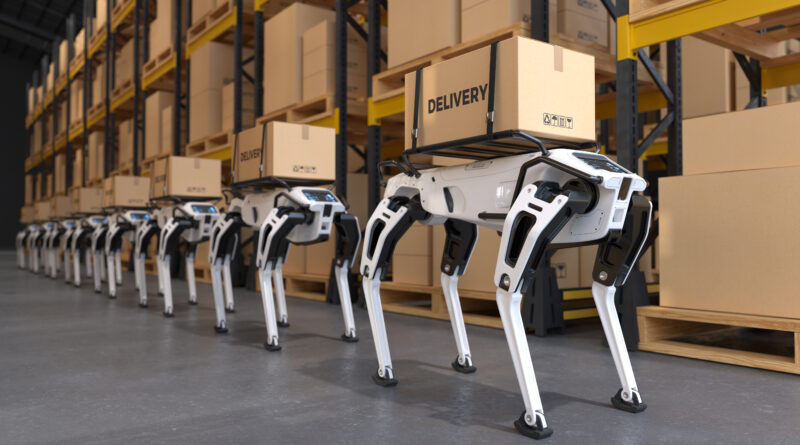
Logistics Robotics News Today: Transforming the Future of Global Supply Chains
Logistics Robotics News Today: How Automation is Reshaping the Industry
The logistics industry is undergoing a dramatic transformation, driven by rapid technological innovation and increasing global demand for faster deliveries. In recent years, robotics has become a central force behind this change, improving efficiency, reducing operational costs, and enhancing supply chain reliability. The logistics robotics news today highlights how companies across the world are integrating advanced robots into warehouses, distribution centers, and transportation systems.
From autonomous mobile robots navigating warehouse floors to AI-powered sorting machines processing thousands of packages every hour, robotics is revolutionizing how goods move from manufacturers to consumers. As e-commerce continues to expand, the need for intelligent automation has never been greater.
The Rise of Robotics in Logistics
Robotics adoption in logistics has accelerated significantly in the past decade. Large retailers, shipping companies, and third-party logistics providers are investing heavily in automation technologies to stay competitive.
According to recent logistics robotics news today, businesses are deploying robots to handle repetitive and physically demanding tasks such as picking, packing, palletizing, and inventory scanning. These robots can work continuously without fatigue, which dramatically increases productivity while reducing workplace injuries.
Another major factor behind this growth is the surge in online shopping. Consumers expect faster deliveries, often within the same day. Robotics helps logistics companies meet these expectations by streamlining warehouse operations and minimizing human errors.
Key Types of Logistics Robots
Several types of robots are currently shaping the logistics landscape. Understanding their roles helps explain why they appear frequently in logistics robotics news today reports.
1. Autonomous Mobile Robots (AMRs)
AMRs move independently through warehouses using sensors and artificial intelligence. They transport goods between storage areas and packing stations, optimizing routes in real time. Unlike traditional automated guided vehicles, AMRs do not require fixed paths, making them highly flexible.
2. Robotic Picking Systems
Robotic arms equipped with advanced vision systems can identify, pick, and sort items of different shapes and sizes. These systems significantly speed up order fulfillment processes and reduce manual labor.
3. Sorting Robots
Sorting robots play a critical role in distribution hubs, where thousands of packages must be directed to the correct shipping routes. These robots use barcode scanning and AI algorithms to ensure accurate and rapid sorting.
4. Automated Storage and Retrieval Systems (ASRS)
ASRS solutions store products in high-density racks and retrieve them automatically when needed. These systems maximize warehouse space while improving inventory management accuracy.
Innovations in these technologies frequently dominate logistics robotics news today, reflecting the industry’s rapid evolution.
Benefits of Robotics in Logistics
The growing presence of robotics in logistics offers numerous advantages for companies and customers alike.
Improved Efficiency
Robots can operate 24/7, enabling warehouses to process orders much faster than traditional manual systems. As highlighted in logistics robotics news today, many automated warehouses now handle thousands of orders per hour.
Reduced Operational Costs
Although robotics requires an initial investment, the long-term savings are substantial. Automation reduces labor costs, minimizes errors, and improves resource utilization.
Greater Accuracy
Human mistakes in order fulfillment can lead to costly returns and dissatisfied customers. Robotics systems use advanced sensors and AI to ensure precision in picking and sorting tasks.
Enhanced Workplace Safety
Warehouse work often involves heavy lifting and repetitive motions. Robots can handle these physically demanding tasks, reducing the risk of injuries among human workers.
These benefits explain why robotics continues to dominate discussions in logistics robotics news today.
Major Companies Driving Logistics Robotics
Several global companies are leading the robotics revolution in logistics. Their innovations frequently make headlines in logistics robotics news today coverage.
E-commerce giants are among the biggest investors in warehouse robotics, deploying thousands of robots across their fulfillment centers. Robotics startups are also playing a crucial role, developing specialized technologies for warehouse automation, inventory tracking, and last-mile delivery.
In addition, traditional logistics providers are forming partnerships with robotics firms to modernize their infrastructure. These collaborations allow companies to adopt automation faster while reducing development costs.
Artificial Intelligence and Robotics Integration
The true power of logistics robotics lies in its integration with artificial intelligence. AI enables robots to learn from data, improve performance over time, and adapt to changing environments.
Recent logistics robotics news today highlights how AI-driven systems can predict demand patterns, optimize delivery routes, and manage warehouse workflows automatically. Machine learning algorithms analyze massive datasets to identify inefficiencies and recommend improvements.
Computer vision technology is another major advancement. It allows robots to recognize objects, read labels, and navigate complex warehouse layouts with remarkable accuracy.
Together, robotics and AI are creating intelligent logistics ecosystems capable of operating with minimal human intervention.
Challenges Facing Logistics Robotics
Despite its many advantages, robotics adoption in logistics also faces several challenges.
High Initial Investment
Implementing robotic systems requires significant capital, which can be difficult for small and medium-sized businesses.
Integration Complexity
Many logistics companies operate legacy systems that were not designed for automation. Integrating robotics with existing infrastructure can be technically complex.
Workforce Adaptation
As automation increases, workers must develop new skills to manage and maintain robotic systems. Training and reskilling programs are essential for a smooth transition.
Even with these challenges, industry experts featured in logistics robotics news today believe the long-term benefits far outweigh the obstacles.
The Future of Robotics in Logistics
The future of logistics robotics looks incredibly promising. Rapid advancements in technology are expected to unlock new capabilities and applications.
One emerging trend highlighted in logistics robotics news today is the development of collaborative robots, or cobots. These robots work alongside human employees, assisting with tasks while maintaining safe interaction.
Another innovation is the use of delivery robots and autonomous vehicles for last-mile logistics. These technologies could significantly reduce delivery times and costs in urban areas.
Drone deliveries are also gaining attention, especially for remote locations or urgent shipments. As regulations evolve, drones may become an integral part of logistics networks.
Additionally, the expansion of smart warehouses powered by robotics, AI, and Internet of Things devices will further optimize supply chains worldwide.
Conclusion
The logistics sector is entering a new era defined by automation, intelligence, and speed. Robotics technologies are transforming every stage of the supply chain, from warehouse operations to final delivery.
As seen in logistics robotics news today, companies that embrace automation are gaining a significant competitive advantage by improving efficiency, accuracy, and customer satisfaction. While challenges remain, continued innovation and investment will drive the industry forward.
Share this content: